The excavation of the necropolis at Phaleron under the SNCC.
The Phaleron Cemetery
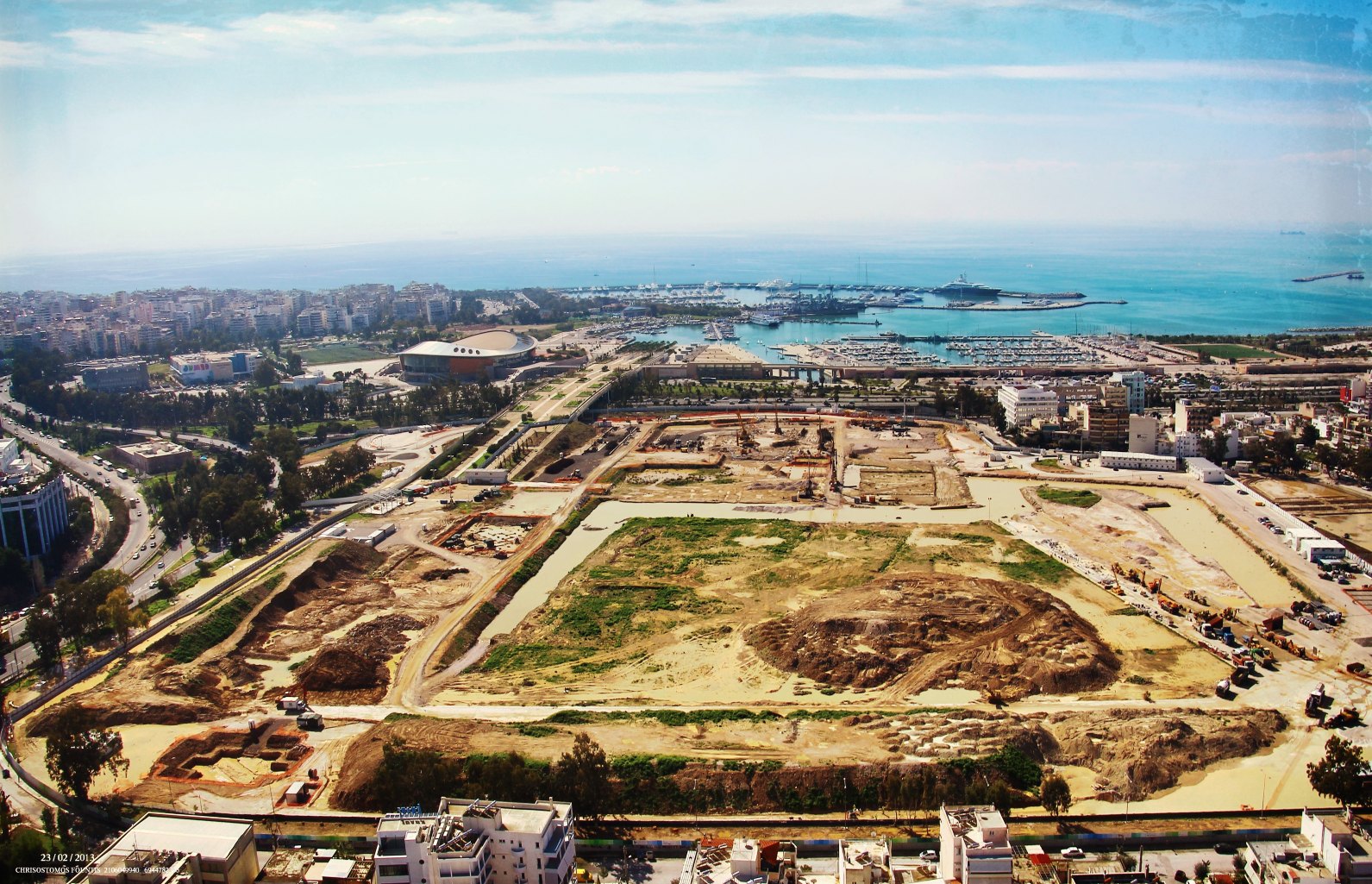
The necropolis of Phaleron, that occupied an area of more than 13 hectars with the graves extending across an area 500m long and 70 to 94 m wide, aligned SE-NW, is situated 4 km south of the centre of Athens, with its largest part laying under the Stavros Niarchos Foundation Cultural Centre. It extended along the eastern part of the bay of Phaleron, the first port of the polis of Athens, following a course parallel to the shoreline, today artificially filled up with extensive earth deposits that have dramatically altered its original natural setting. On the basis of recent studies, the area is geologically characterized by the occurrence of shoreline sedimentary rocks or beach rocks, while the southeast end of the bay was covered by sand dunes and, an old saline swamp. The site was known until the middle of the last century under the place-name Voidolivado.
The necropolis at Phaleron was in use from the late 8th to the 4th century BC.
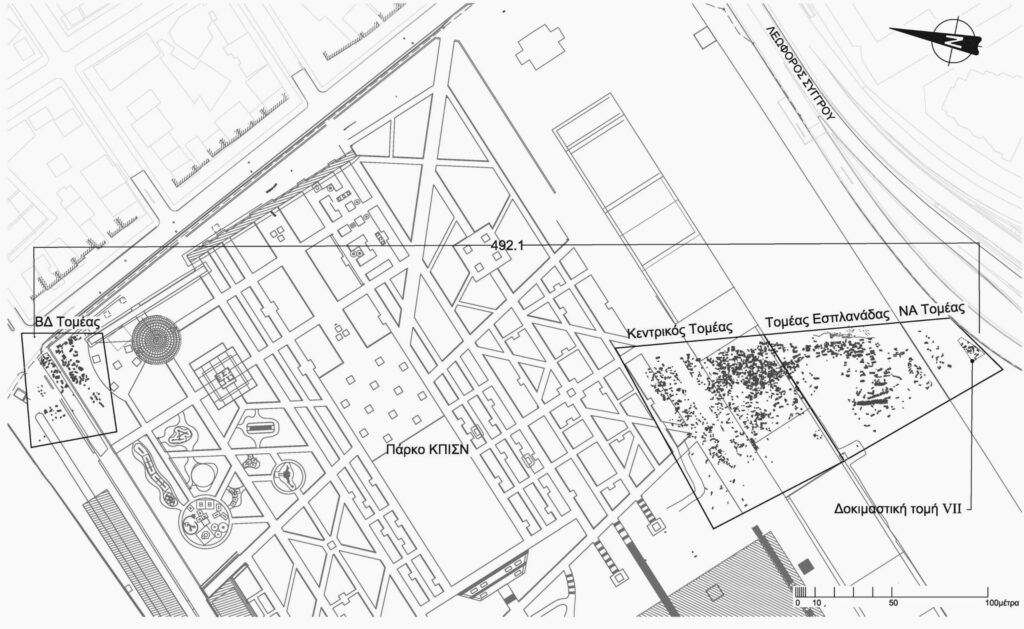
The necropolis was in use from the late 8th to the 4th century BC. The graves that had been excavated, extend over two main areas at the corners of the SNFCC’s building. The largest by its SE corner has been divided into the Central Sector, the Esplanada and the SE Sector, while the smaller burial area comprises the NW Sector. Although the area below the Center’s Park measuring ca. 57 hectars, remained unexplored, the necropolis extended also here, with burials recovered on either of its edge. If the calculations of the excavator are correct, then the Park covered the triple of the excavated burials.
Topographic plan of the SNCC and the excavated areas.
The graves
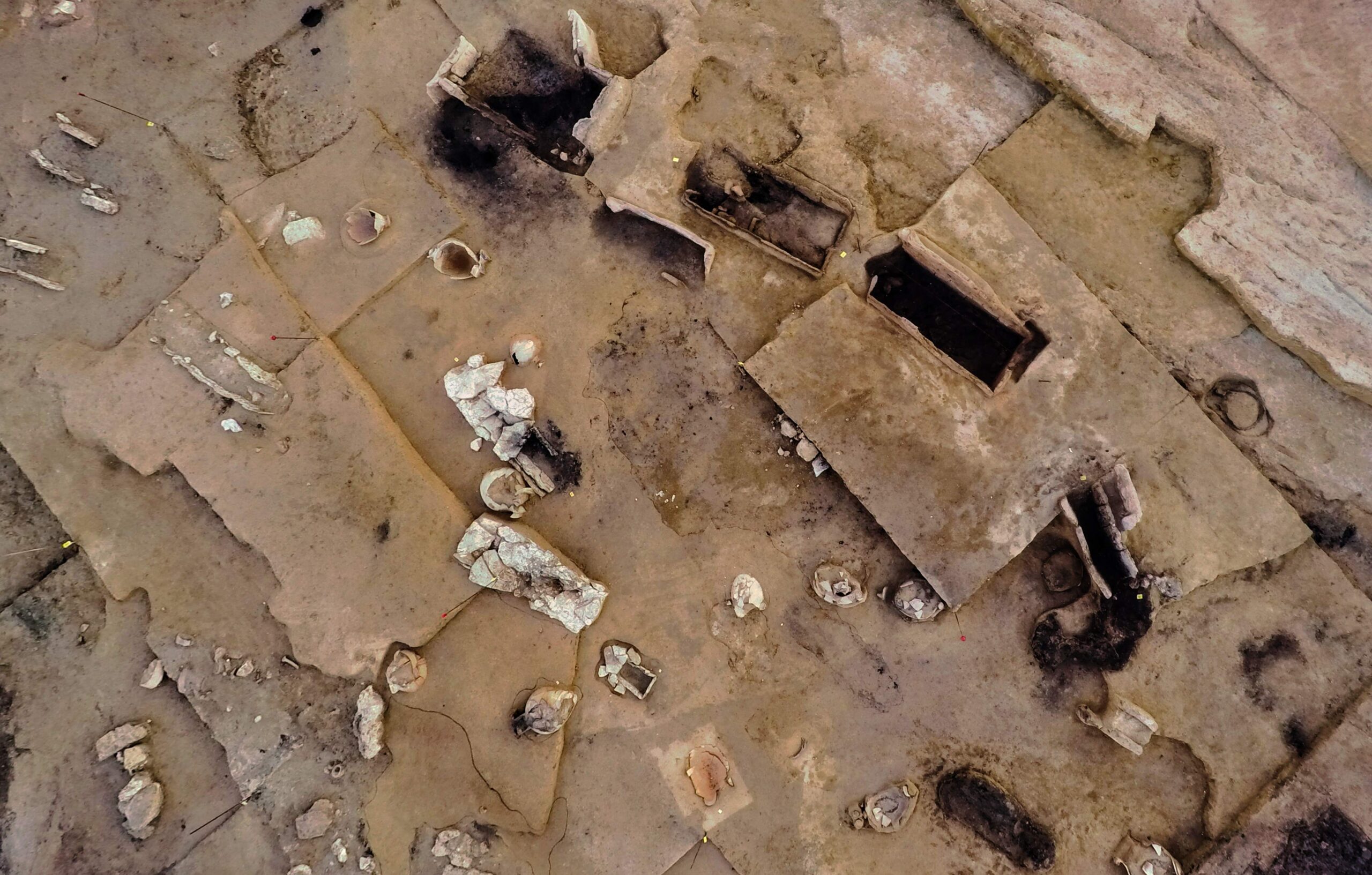
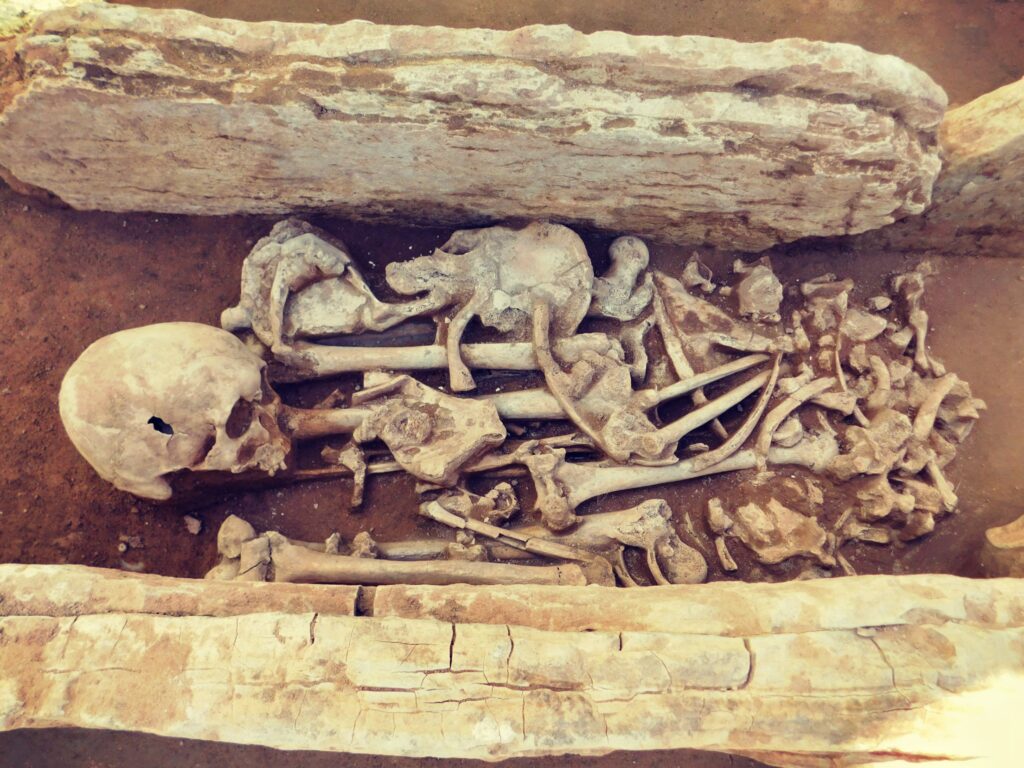
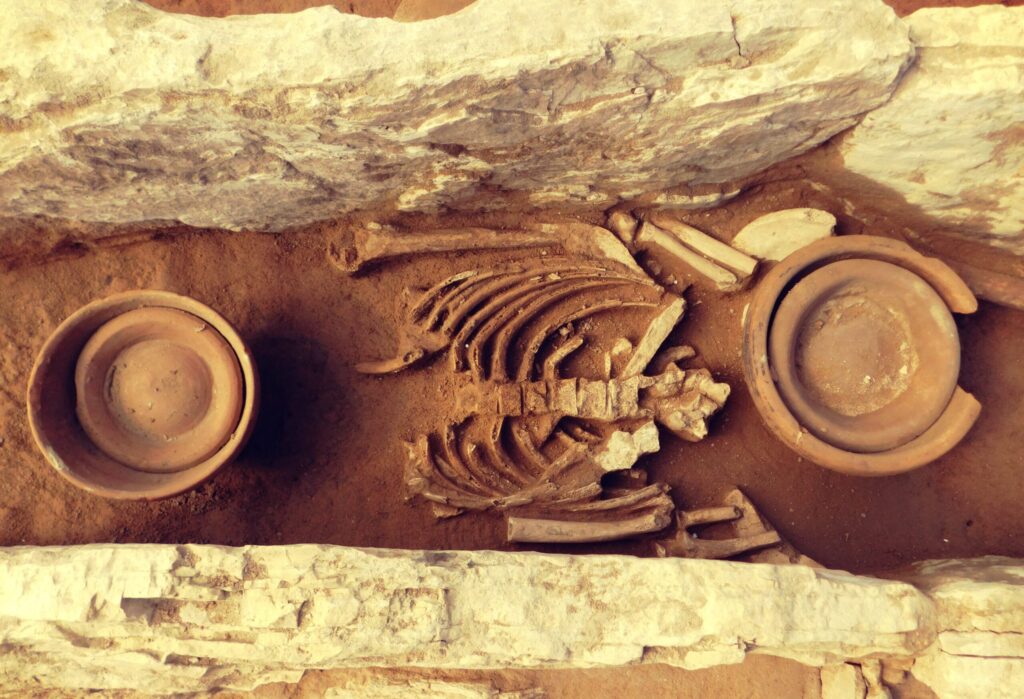
Inhumations of adults placed in simple pits dug in the sand, sometimes covered with stone slabs, form the commonest type of burials in the cemetery. Only some of the inhumations had been placed into cist graves. The earliest inhumations date to the last decades of the 8th century and they remain the main funerary feature of the necropolis until the end of its use, with the majority being unfurnished. A number of inhumations in pits belong to young children, and they can be either unfurnished or furnished with one or two vases
The pot burials of non-adults, the enchytrismoi, form the second largest category of graves at Phaleron with the majority dating to the 7th century BC. Transport amphorae, pithoi and cooking pots were mostly used as containers of the bones of neonates, infants and young children, followed by mniniature mostly vases, clay figurines, beads and a variety of small finds. In a number of cases, children have been inhumed inside clay larnakes. Some of the graves of the cemetery did not belong to humans but to animals, mainly equids, without being possibly to associate them with a specific adult burial.
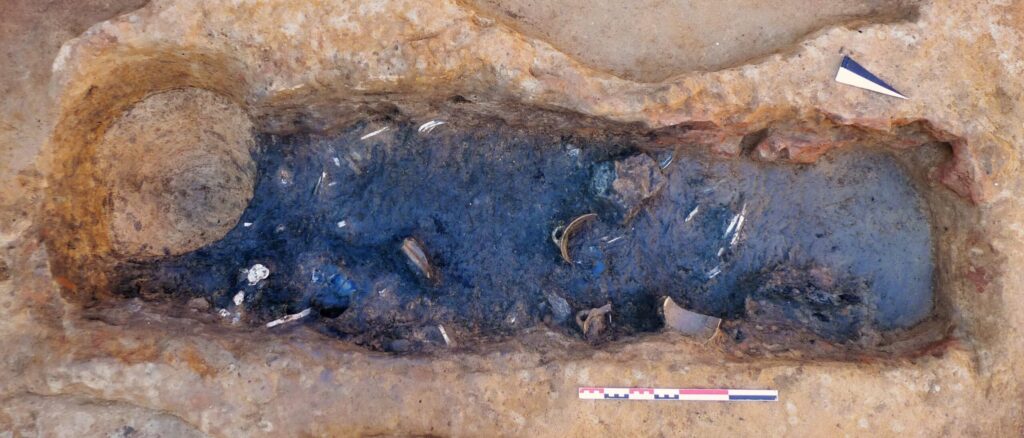
Cremations were significantly less than the inhumations and they were mostly primary. Only two secondary cremations had been identified.
'Βιαιοθάνατοι'
Violently killed
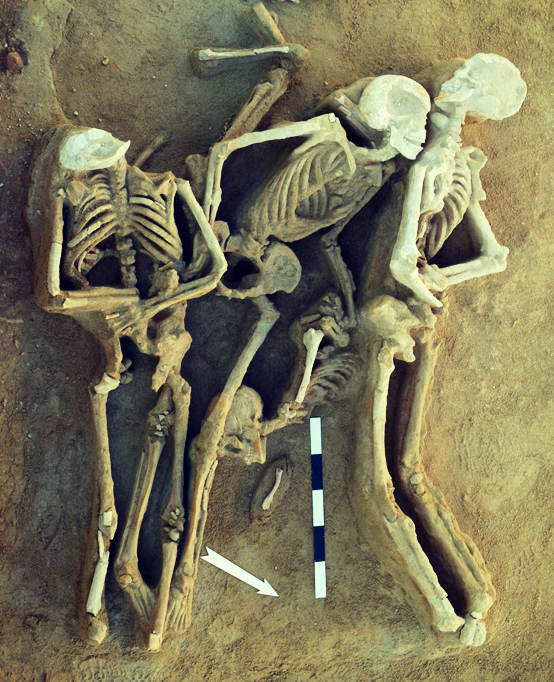
The uniqueness of the Phaleron necropolis lies into burials of individuals that had been violently killed: 187 ‘βιαιοθάνατοι’ have come to light and they mostly date to the necropolis’ early period of use. Buried either individually or in small or large clusters, form the largest known group of deviant deceased in the Greek world, representing 11% of the total burials of the cemetery.