Τhe Project will elucidate the social hierarchies, complexities, and pathogenesis of early Athens.
Exploring early Athens
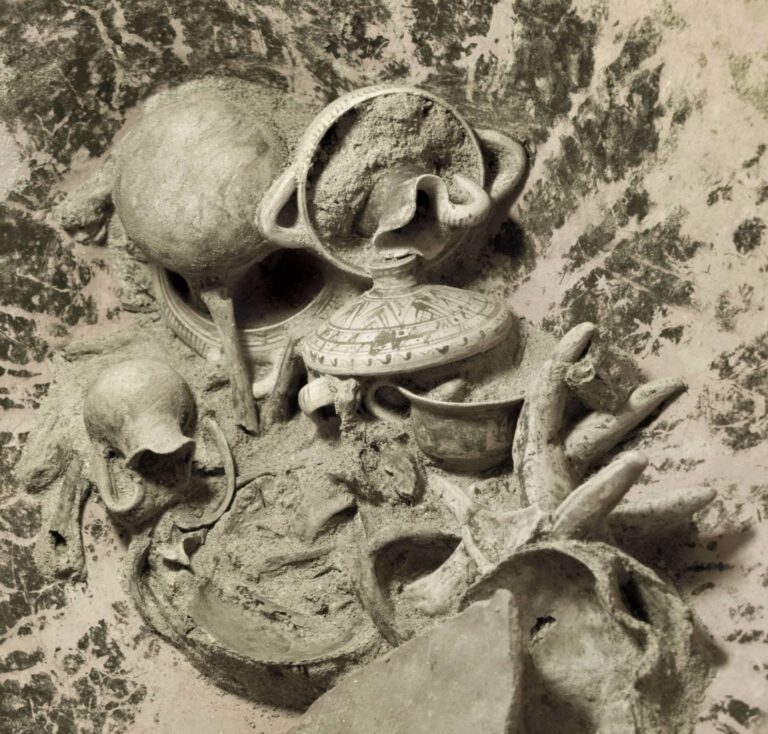
Bo.Me.Po will dynamically return to early Athens to throw light on its social hierarchies, complexities, but its pathogenesis too. The project’s main objective is to offer a holistic reconstruction of the realities of Athens in the 7th century BC on the basis of the burial data from the Phaleron cemetery.
Objectives
The holistic study of the Phaleron graves aim at meeting the following research objectives:
1
To explore modes of life, living conditions, kinship ties, human genetic affinities, provenance and mobility in Athens during the 7th century,
2
To reconstruct the social and political structure of Athens at the time by examining acts of violence and treating questions of exclusivity and inclusivity,
3
To elucidate the impact and uses of the past and their role in the development across generations of a distinctive memory that affected the social life of citizenship before the birth of democracy.
The archaeological and bioarchaeological traces on the deceased of the Phaleron cemetery will be used to:
i
Reveal the dark side of the polis which has been long considered as the ‘birthplace of democracy’ and the ‘cradle of Western civilization’,
ii
Critically assess the West’s idealized image of ancient Athens that has played a key role in shaping European modernity and in underpinning the emergence of the modern Greek state following the War of Independence in 1821.
iii
Revise the ideals of antiquity as incorporated in the modern Greek and Western narratives long fueling colonialism and white supremacy.